Investing Mindset · Go deeper · Beginner · 5-7 min
Connected to: Set investment goals and a time horizon before choosing assets
Starting small: why your first step matters more than your first return
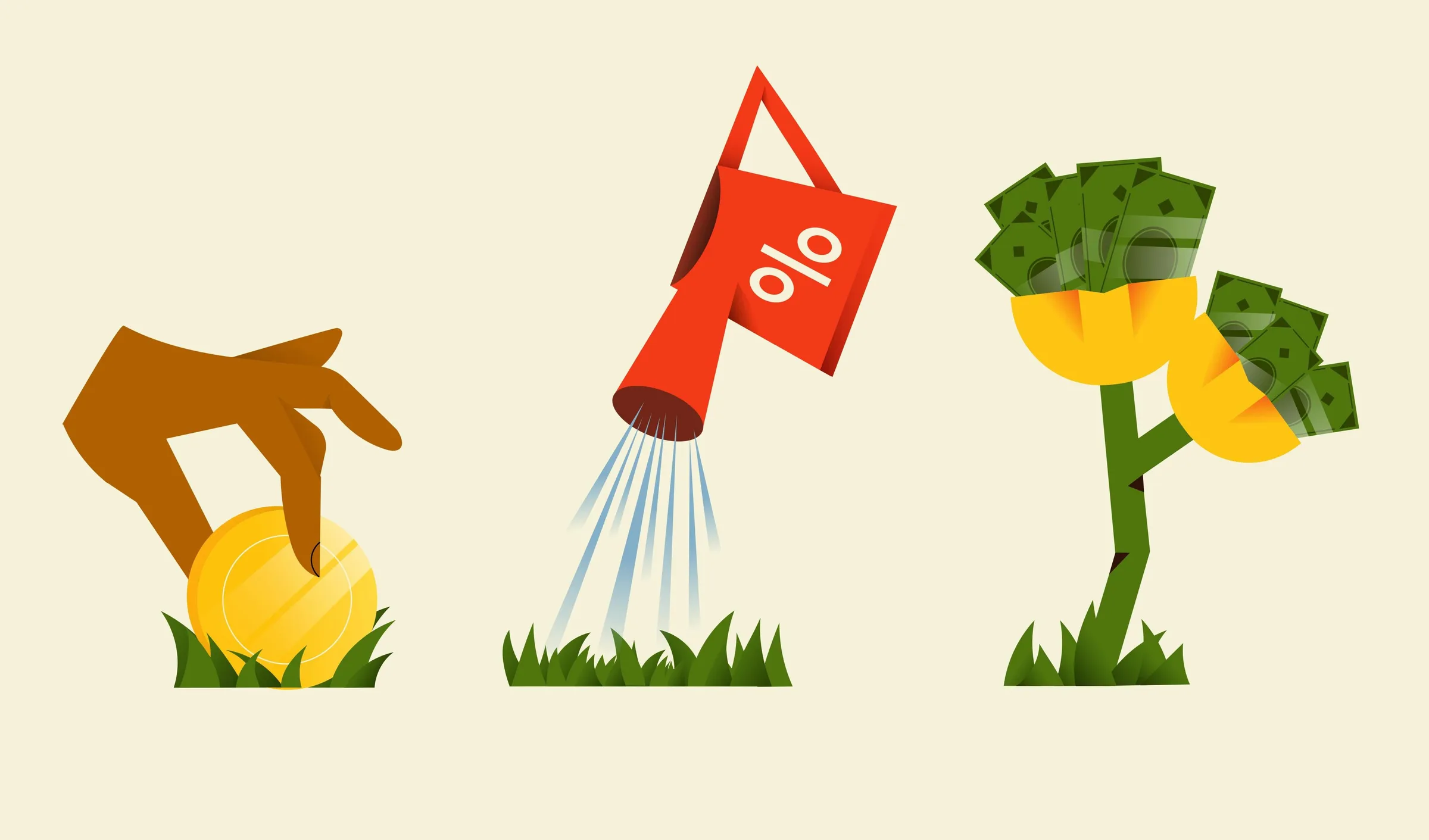
You don't need a lot of money to begin. Waiting for more cash, the perfect moment, or full expertise often means never starting.
A small, affordable amount takes the pressure off, so you can learn how prices move without panicking.
The habit matters more than the first result. Investing regularly and staying calm count for more than an early gain.
Confidence comes after you start, not before.
Once you know what your money is for and when you will need it, the next obstacle is often simply getting started. This lesson builds on the core lesson on investment goals and time horizon. It explains why a small first step can teach you more than waiting for a perfect one, and what to check before you begin or increase the amount.
Why do so many people delay starting to invest?
For beginners, the hardest part is rarely choosing which stock or ETF to buy. It is starting. Many of us tell ourselves:
"I'll wait until I have more money."
"I'll wait until the market settles down, or falls further."
"I'll wait until I understand everything."
These reasons sound sensible, and sometimes they are. Building an emergency fund or paying down expensive debt first can be the right call. But when waiting becomes open-ended, it keeps you out of the practical learning that only comes from taking part.
Investing does not have to begin with a big decision. For a beginner, a small, clear step is often more useful than a large plan that never gets carried out.
How does a small amount make investing less intimidating?
When the starting amount is large, every market movement can feel stressful. A small dip in your account causes worry; a small rise can make you overexcited. Your emotions start following every number on the screen.
Starting with a small amount of spare money—money you will not need for living costs, debt repayments, or emergencies—lowers that pressure. You can watch the market more calmly, learn to track a portfolio, read price movements, and notice how you react to them.
What VND 500,000 a month can represent
For example, VND 500,000 a month might equal a few cups of bubble tea, a few meals out, or a few Grab rides (a ride-hailing app widely used in Vietnam and Southeast Asia) over a month. This is an illustration, not a suggested amount. What counts as affordable depends on your income, obligations, and emergency savings, and for some households VND 500,000 is essential money.
If that money is spent straight away, its use ends there. If you set it aside with discipline, it becomes a practical lesson in how you manage money, risk, and time.
Smaller amounts, smaller mistakes—but still real money
A mistake made with a small amount usually costs less in absolute terms than the same mistake made with a large one. When the cost is limited, the lesson can be easier to accept and learn from. That does not make a small amount risk-free: invested money can fall in value or be lost, so only invest an amount whose loss would not affect your essential needs.
A dollar-cost averaging (DCA) calculator, which models regular contributions of a fixed amount, can show how small monthly sums add up over time. Treat any growth it shows as an illustration based on the assumptions you enter, not a forecast.
Why is investing like learning a new skill?
No one learns a new language by starting with a dense, hundreds-of-pages technical textbook.
Investing works the same way.
Beginners need time to understand the basics: what spare money is, what risk means, why markets move, what it means to own shares in a business, and why time matters in long-term investing.
In Vietnam, learning step by step is familiar. A university student takes foundation courses before moving into a specialist subject. A family business often starts small, gains experience, and expands only after that.
Investing tends to follow a similar pattern:
Small experiences → familiarity → confidence → better decisions
Why shouldn't returns be your main goal at the start?
Short-term results can easily mislead a beginner. If your account rises, you may think you are skilled; if it falls, you may think you got it wrong. Either way, a few weeks of price movement says little about whether your decision was sound, and judging yourself this way makes investing exhausting.
In the early stage, the most important thing is to understand yourself:
Do you panic when the market falls 2–3%?
Do you have the patience to stick to a monthly plan?
Are you really using spare money?
Do you understand what asset you own?
Long-term investing tests more than financial knowledge. It also tests your discipline and composure when emotions run high.
Start small, but don't think small
Starting small is a way to respect a long-term journey. At teko, a sustainable investing approach starts with clarity:
Have a solid emergency fund in place first.
Work out exactly how much spare money you have each month.
Choose assets that are transparent and that you understand. A diversified fund such as an ETF tracking a broad US stock index is one example: it spreads money across many companies rather than relying on one, but it can still lose value. Check what it holds, its fees, and its currency exposure, as Investor.gov explains for ETFs.
Keep a regular habit of setting money aside, and avoid making decisions based on emotion.
Next step
Starting with an amount you can afford lets you practise tracking your decisions and your reactions without putting essential money at risk. Before you choose any particular asset, a bigger question remains: how much uncertainty are you willing to accept in exchange for a possible return? The next Core lesson explains the trade-off between risk and return, so you can judge an asset by more than its recent performance.
Continue the main path: Risk, return, and investment trade-offs
Go deeper: Investing by time horizon
This content is for personal finance education only and does not constitute personalized investment advice. Consider your own goals, time horizon, ability to bear losses, and financial circumstances before investing.