Investing Basics · Go deeper · Intermediate
Connected to: What is an ETF?
How does an index ETF work?
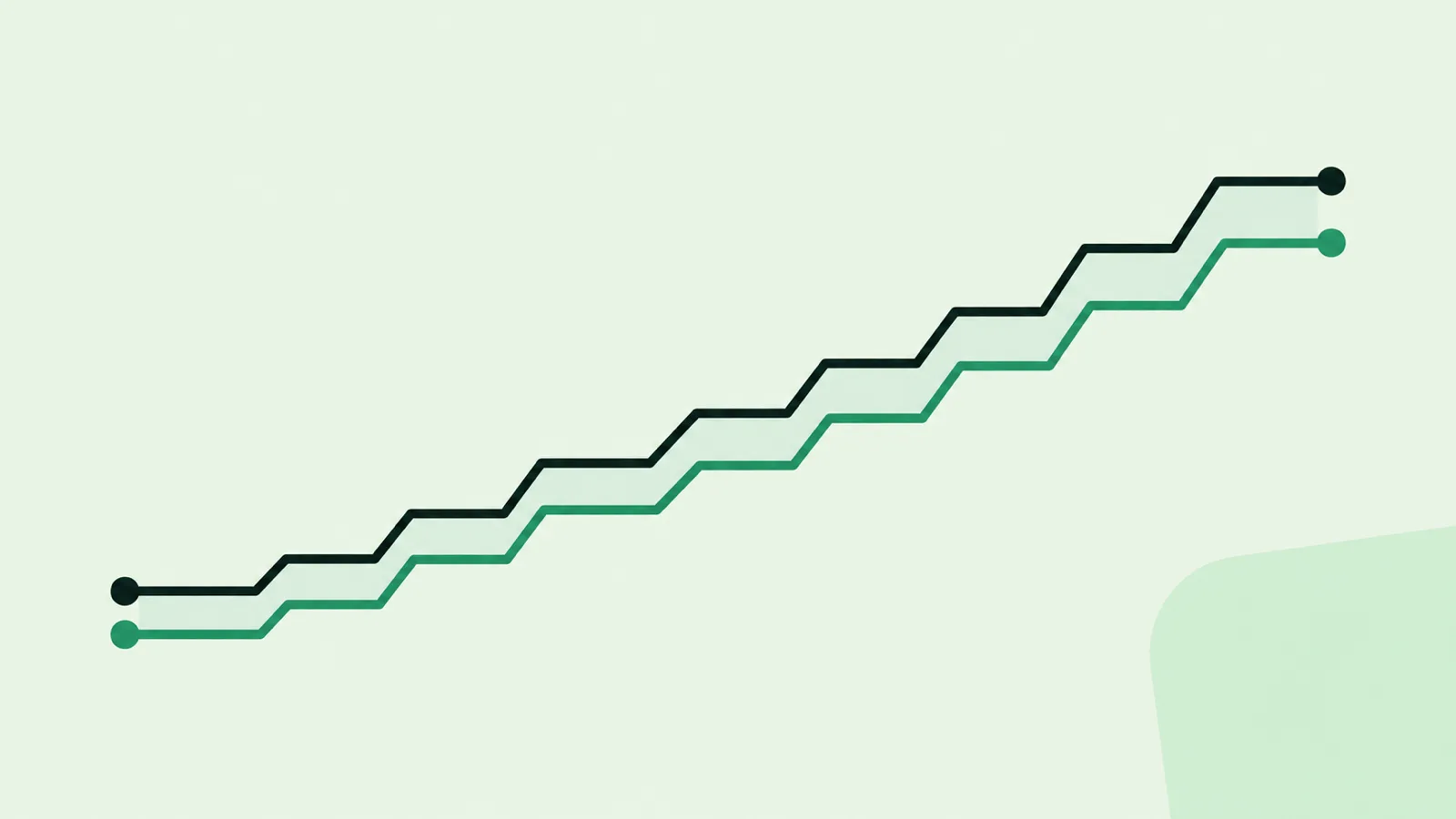
An index ETF aims to match an index, not beat it: it is designed to track the performance of a reference index such as the S&P 500, VN30 or MSCI World.
The ETF is not the index itself: the index is a measuring stick, while the ETF is an investment product that builds a portfolio to move closely with it, though never perfectly at all times.
Several things can pull an ETF away from its index: fees, dividends, rebalancing, the replication method and tracking error all play a part.
Judge the fund, not just the label: check which index it follows, how closely it tracks, what it costs and how its holdings are disclosed.
What is an index ETF?
If you have already learned what an ETF is and what a stock market index is, you know that:
An index is a measuring tool.
An ETF is an investment product.
An index ETF is a fund designed to replicate the performance of a specific index. For example:
An ETF that tracks the S&P 500.
An ETF that tracks VN30.
An ETF that tracks MSCI World.
An ETF that tracks FTSE All-World.
The fund's goal is not to beat the index. Its goal is to follow the index as closely as possible.
This is an important difference between index ETFs and many actively managed funds. Index ETFs are often described as passive investing, because the fund does not try to pick stocks to outperform the market. Instead, it tries to replicate an index that already has clear rules.
An ETF does not buy "the index"
A common misunderstanding is:
"The ETF buys the index."
In reality, that does not happen. An index is not an asset you can buy or sell.
Instead, the ETF tries to hold the right assets to produce results close to the index. For example, if an index includes 500 large US companies, the ETF may invest in those companies in similar proportions. When the companies in the index rise or fall, the value of the ETF's portfolio changes too.
That is how an ETF replicates an index. Put simply, the index is the measuring stick, and the ETF is a product that tries to stay close to it.
How does an ETF replicate an index?
There are several methods, but beginners only need to understand the two most common ones.
Full replication
With full replication, the ETF tries to hold all, or almost all, of the assets in the index. For example, if an index contains 500 companies, the ETF may hold nearly all 500 in matching proportions.
Strengths: it usually tracks the index more closely, and it is more transparent and easier to understand.
Limitations: it can cost more for very large indexes, and buying every asset gets more complicated when an index has thousands of components.
Representative sampling
Some indexes are too large or too complex for a fund to hold in full. In that case, the ETF may choose a representative group of assets designed to produce results close to the index.
Strengths: it can reduce trading costs, is simpler to run, and can suit very broad indexes or indexes that are hard to hold in full.
Limitations: it can drift further from the index, and investors need to understand that the fund holds a representative sample, not the whole index.
You do not need to memorize the name of each method. What matters is understanding that an ETF tries to replicate an index; it does not copy every detail perfectly.
How do full replication and representative sampling differ?
Feature | Full replication | Representative sampling |
|---|---|---|
How it works | Holds most or all of the assets in the index | Selects a group of assets to represent the index |
Accuracy | Usually tracks the index more closely | May drift further from the index |
Running costs | Can be higher if the index is very large | Can be lower because it holds fewer assets |
Ease of understanding | Easier for beginners | Requires understanding how the fund picks its sample |
Often used for | Smaller or easy-to-access indexes | Very large, broad or complex indexes |
This table does not mean one method is always better. A well-built index ETF uses a method that suits the index it tracks, keeps its costs reasonable and has a stable tracking gap.
Why does an ETF need to rebalance its portfolio?
An index is not a fixed list. Major indexes are usually reviewed on a regular schedule. For example:
New companies may be added to the index.
Existing companies may be removed.
The weights of companies may change.
When that happens, the ETF also needs to adjust its portfolio. This process is called rebalancing.
If the ETF did not make these changes, its performance would drift further and further from its reference index. When a company is added to or removed from the index, the ETF usually has to buy or sell the matching assets to keep replicating it. These changes can create trading costs and temporary gaps.
What is tracking error?
Tracking error is one of the most important ideas when you evaluate an ETF.
Put simply, tracking error is how much the ETF's performance differs from the performance of the index it is trying to follow. For example:
The index rises 10%.
The ETF rises 9.7%.
That gap is part of the tracking difference. (Strictly speaking, the gap over a single period is often called tracking difference, while tracking error usually describes how much that gap varies over time. Both point to the same question: how closely does the fund follow its index?)
It is important to understand that tracking error does not mean the fund is always performing badly. In many cases, it is a normal result of costs, taxes, dividends, rebalancing timing or the replication method.
Every ETF has some tracking gap. The useful questions are usually:
How large is the gap?
Is the gap stable over time?
Is the gap reasonable for the type of index and assets the ETF tracks?
Why are an ETF and its index not exactly the same?
Many beginners expect that:
"If the index rises 10%, the ETF must rise exactly 10%."
In practice, this rarely happens. Several factors create differences.
Management fees
ETFs usually have running costs. These costs can make the fund's performance slightly lower than the index.
Trading costs
When an ETF buys or sells assets to rebalance its portfolio, the fund pays trading costs. This can also create a small gap.
Rebalancing timing
An ETF does not always adjust its portfolio at exactly the same moment as the index. Differences in timing can affect results.
Dividends
How dividends are received and handled can create temporary differences between an ETF and its index. Some ETFs pay dividends out to investors, while others may reinvest them inside the fund. The lesson on accumulating vs. distributing ETFs explains this in more detail.
Taxes and market rules
With international ETFs, dividend withholding tax, market rules, platform fees and exchange rates can all affect an investor's actual results. This matters especially if you invest from Vietnam and convert your results back into VND.
Is an index ETF completely passive?
Not entirely. Index ETFs are often called passive investing because the fund does not try to pick stocks to beat the market. However, the fund still needs to:
Manage its portfolio.
Rebalance.
Handle money flowing in and out.
Track its reference index.
Handle dividends and changes in the portfolio.
In other words, an index ETF is passive in its investment strategy, but it still needs active portfolio management to keep replicating its reference index.
The difference from an active fund is the goal. An active fund usually tries to pick assets that outperform the market, while an index ETF usually tries to stay close to the market, or to the part of the market its index represents.
What makes an index ETF well built?
Beginners often look only at returns. However, there are several factors worth paying more attention to.
Does the ETF track its index closely?
A well-designed ETF usually has a low and stable tracking gap compared with the type of index it follows.
Are the costs reasonable?
High costs can reduce long-term results.
Is the portfolio transparent?
Investors should understand which assets the ETF holds.
Are its size and liquidity adequate?
An ETF that is very small or rarely traded can create other problems, such as higher trading costs.
Is the reference index suitable?
Before judging an ETF, you need to understand the index it tracks. An ETF can track its index very closely, but if that index is highly concentrated or does not match your goals, the risk remains.
A checklist for evaluating an index ETF
Before investing in an index ETF, check:
Which index does the ETF track?
Do I understand which market, sector, country or asset class that index represents?
Does the ETF use full replication or representative sampling?
Is its tracking error stable over time?
Is the fund's management fee reasonable?
Are the ETF's holdings disclosed transparently?
Is the ETF large and liquid enough to trade easily?
Does the ETF accumulate or distribute dividends?
If I invest from Vietnam, do I understand the exchange rate, taxes, fees and trading platform?
This checklist is not meant to help you "pick the best ETF" straight away. It helps you know what to read and check before making a decision.
Common misunderstandings about index ETFs
"An ETF always matches its index exactly"
Not true. An ETF only tries to follow its index closely; it cannot guarantee exactly the same result.
"The bigger the tracking error, the better"
Not true. For an index ETF, tracking error is usually expected to be low and stable, in line with the type of assets the ETF tracks.
"Index ETFs have no risk"
Not true. If the market falls, an index ETF can fall too. An ETF does not remove market risk.
"Just pick the ETF with the highest return"
Not quite. Past performance does not guarantee future results. Understand what the fund tracks and how it works before you look at returns.
"Any index ETF suits long-term investing"
Not always. An ETF that tracks a broad market index can be very different from one that tracks a narrow sector or a hot theme. The index an ETF follows determines most of the product's risk.
What should Vietnamese investors understand about index ETFs?
When looking at international ETFs, investors in Vietnam often come across indexes such as:
S&P 500
Nasdaq-100
MSCI World
FTSE All-World
The key point is that you do not invest in the index directly. You invest in an ETF that is trying to replicate that index.
So beyond market movements, your investment results can also be affected by:
Fund costs.
Tracking error.
Exchange rates.
Taxes.
The trading platform.
How the assets are held in custody.
For example, if an ETF is priced in USD, movements in the USD/VND exchange rate can affect your result once you convert it back into VND. An investment can rise in USD terms, while your final result in VND still depends on the exchange rate.
That is why understanding how an ETF works matters just as much as understanding the index it tracks.
Before you invest in an index ETF
Ask yourself:
Which index does this ETF track?
Do I understand that index?
Does the fund track the index closely?
How much does the fund cost?
What are the main risks?
How does the ETF handle dividends?
If I invest from Vietnam, do I understand the exchange rate, taxes, fees and platform involved?
If you cannot answer these questions yet, it is completely normal to keep learning before you invest.
Next step
An index ETF can replicate its index in different ways, and fees, tracking gaps and fund structure all shape the result you actually get. Even a fund that tracks its index closely only gives you what that index holds. That raises a bigger question: does owning one or two index ETFs really spread your risk? The next lesson on the main path explains diversification and how to check whether your portfolio is concentrated in one company, sector or market.
Continue the main path: What is diversification?
Back to the core lesson: What is an ETF?
This content is for personal finance education only and does not constitute personalized investment advice. Consider your own goals, time horizon, ability to bear losses, and financial circumstances before investing.