Investing Mindset · Go deeper · Beginner
Connected to: Speculation vs. long-term investing: which is better?
Is short-term stock trading speculation?
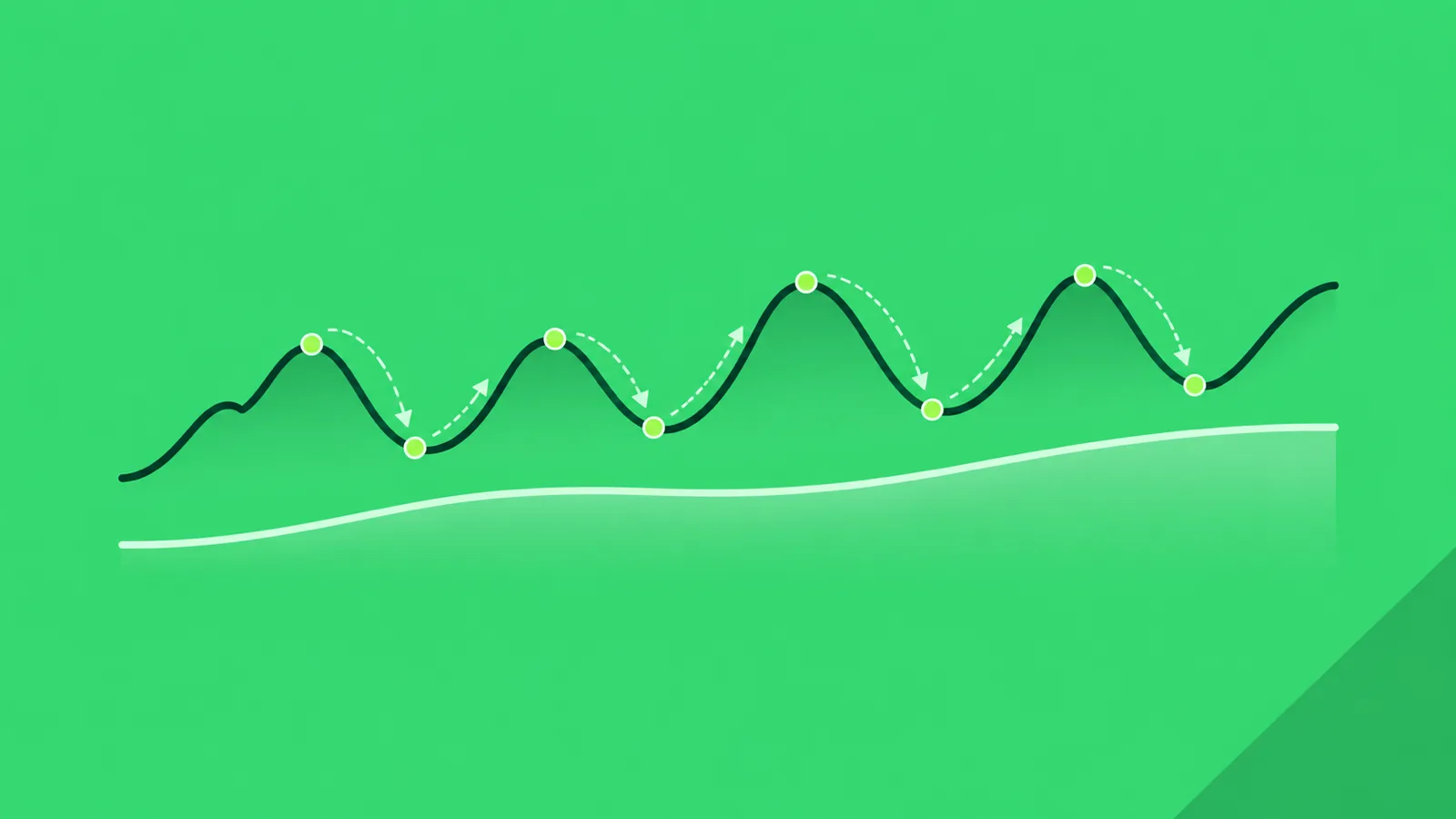
Short-term trading is mostly speculation, because it bets on price moves rather than a business's long-term value.
It isn't automatically gambling, but without a plan, loss limits, and emotional control it can quickly become very risky.
Before you try it, be clear on your strategy, the most you can afford to lose, the time it takes, and the stress it may bring.
Many people who buy a stock and sell it a few weeks later describe what they do as investing. Whether that label fits depends less on the stock and more on what you are trying to profit from. This lesson explains where short-term trading sits between long-term investing, speculation, and gambling.
What is short-term stock trading?
Short-term trading means buying and selling stocks or other financial assets over a relatively short period, with the aim of profiting from price changes. It is sometimes called swing trading, and in Vietnam it is commonly known as lướt sóng, which means "riding the waves."
A position might be held for a few days, a few weeks, or a few months. Short-term traders usually pay close attention to price trends, market news, investor sentiment, and other near-term opportunities.
Short-term trading is not long-term investing. It is a short-term approach that tries to take advantage of price movements within a limited window.
For example, someone buys a stock because they believe its price may rise over the next few weeks after some positive news. They do not plan to hold it for years, and they are not buying it to share in the company's long-term growth. That is a typical case of short-term trading.
How do short-term trading, day trading, and long-term investing differ?
Criterion | Short-term trading | Day trading | Long-term investing |
|---|---|---|---|
Holding period | A few days to a few months | Within a single day | Many years |
Aim | Profit from short-term price moves | Profit from very short-term price moves | Build wealth over the long term |
Focus | Price trends and news | Intraday price movements | The asset's value and your financial goals |
Trading frequency | Moderate to high | Very high | Lower |
Emotional demand | High discipline | Very fast reactions | Patience and consistency |
The table does not say that one approach is always better. It shows that short-term trading sits closer to day trading and other frequent trading than to long-term investing.
Why do many people see short-term trading as speculation?
Short-term trading is often seen as a form of speculation because its main goal is to profit from price movements over a short period.
In long-term investing, the usual question is: "What is this asset worth, and does it fit my goals?"
In short-term trading, the usual question is: "Is the price likely to go up or down soon?"
The difference lies in the focus. Long-term investing tends to concentrate on value, time, and financial goals. Short-term trading tends to concentrate on when to buy and sell, how the market is moving, and how other participants are reacting.
If you are still unsure where the line between these two ideas falls, the lesson on why many people mistake speculation for investing can give you a foundation before you go further into short-term trading.
Short-term trading is not wrong in itself, but it is different from long-term investing. What matters is understanding the risks and deciding whether this approach fits your goals. For a broader comparison of the two approaches, read Speculation vs. long-term investing.
Is short-term trading gambling?
Not necessarily.
This is a common misunderstanding. There is a difference between someone who trades short term with a plan, understands the risks, and manages their money carefully, and someone who buys and sells purely on emotion or rumors.
Criterion | Planned short-term trading | Gambling or uncontrolled betting |
|---|---|---|
Basis for decisions | Analysis and clearly stated assumptions | Mainly luck or emotion |
Risk management | Set loss limits and position sizes | No clear maximum loss |
Plan | Entry point, exit point, and a reason for the trade | Changes with emotion |
Expectations | Accepts that the trade may be wrong | Expects to win fast or recover losses fast |
Behavior after a loss | Reviews the plan | Takes more risk to win the money back |
A plan does not make short-term trading safe or profitable. Planned trades can still lose money. But trading without a plan or risk limits can come to look more and more like gambling. A separate lesson, When does speculation become gambling?, looks at that boundary in more detail.
Why does short-term trading appeal to beginners?
Short-term trading is appealing because it creates the feeling that the market can be "figured out" in a short time. For beginners, that can feel more exciting than patiently building wealth over many years.
A sense of control
Many people believe that if they watch the market closely enough, they can predict price movements. The feeling is understandable, but markets are usually more complex than a short-term chart suggests.
The hope of quick profits
The idea of making a profit in a few days or weeks is often more attractive than waiting years. But the chance of a quick gain usually comes with a higher risk of loss.
Success stories on social media
Social media often highlights people who made large profits in a short time. You hear far less about those who lost money, gave up, or never shared their poor results.
The feeling of instant success
A quick profitable trade can make you feel that you understand the market. But a few good results are not enough to show that a strategy works over time.
Strong emotions
Short-term trading can bring excitement, stress, and suspense. For some people, these emotions are exactly what makes trading hard to control.
Which risks do beginners tend to underestimate?
Before trading short term, beginners should understand both the risks and their own ability to tolerate them, because short-term trading can create more pressure than long-term investing.
The risk of being wrong
Predicting market movements accurately and consistently is extremely difficult. Even experienced traders are often wrong.
Emotional risk
Fear, greed, and FOMO (the fear of missing out) can strongly affect buying and selling decisions. This is one reason many people buy after prices have already risen sharply and sell when the market falls.
The risk of trading too often
Every buy or sell decision is another chance to make a mistake. Each trade may also involve fees and taxes, which add up when you trade frequently. Constant trading can also pull your attention away from your long-term goals.
The risk of losing sight of your plan
Some people start as long-term investors but drift into short-term trading because they get caught up in daily price swings. When that happens, the original goal is easy to forget.
The risk of using the wrong money
If you trade with money set aside for an emergency fund, tuition, rent, or another important goal, the damage to your personal finances could be far greater than the loss on any single trade.
The biggest risk of short-term trading is not only losing money. It is also losing discipline and getting carried away by emotion.
What makes short-term trading riskier?
Short-term trading becomes riskier when the person trading has no clear limits.
No maximum loss: If you do not know where you will stop when you are wrong, a small loss can grow into a large one.
Positions that are too large: Putting too much money into one short-term trade makes it easier for emotion to override judgment.
Trading to win back losses: After a loss, many people want to make the money back quickly. This is one of the most dangerous warning signs.
No record of your reasons: If you do not write down why you bought or sold, it is hard to tell whether you are learning or simply repeating the same mistake.
Risk management does not guarantee a profit. It only helps prevent a single wrong decision from doing too much damage to your finances and your peace of mind.
What psychological challenges come with short-term trading?
Short-term trading is not only about reading charts or following the news. It is also a test of your emotions.
FOMO: You see a stock rising sharply and want to buy right away, even though you have no plan. This is a good moment to revisit the lesson on FOMO in investing, which explains why the fear of missing out can rush your decisions.
Greed: You reach your original target but keep holding because you want more, and then the price turns.
Fear of taking a loss: You hold a losing trade in the hope that the price will recover, even though your original reason for buying no longer holds.
Panic: You sell during a sharp market fall just to make the anxiety stop.
If you do not recognize these emotions, short-term trading can easily turn from a short-term plan into a series of uncontrolled reactions.
Can you invest for the long term and trade short term at the same time?
Yes, it is possible.
Many people do both. For example, they keep most of their assets in long-term investments and set aside only a small portion for short-term ideas.
The key is to keep the two purposes clearly separate.
If you use money meant for long-term goals to keep chasing short-term opportunities, your risk can rise considerably. If you are clear about which money is for investing and which is for experimenting, managing risk becomes easier.
Keeping the trading portion small limits how much it can affect your overall plan, but it does not make that money safe. Treat it as money you could afford to lose entirely without affecting your essential needs or important goals.
If you are not sure whether you are investing or speculating, the lesson on signs you may be speculating without realizing it can help you check before your next decision.
Should beginners try short-term trading?
There is no single right answer for everyone. However, beginners often underestimate how much knowledge, time, and emotional control short-term trading requires.
Before you try it, ask yourself:
Am I using money I do not need for other purposes?
Do I have an emergency fund?
Do I understand the risks of this strategy?
Have I decided in advance the maximum loss I can accept?
Do I have enough time and discipline to follow my plan?
If I lose money, will I try to win it back right away?
If you cannot answer these questions yet, it is perfectly normal to keep learning before you try short-term trading.
Key takeaways
Short-term trading means buying and selling over short periods to profit from price movements.
Short-term trading is usually closer to speculation than to long-term investing.
Short-term trading is not automatically gambling, but it can start to look like gambling without a plan and risk management.
Beginners often underestimate emotional risk, the risk of trading too often, and the risk of losing discipline.
What matters is knowing which money you are using, what it is for, and how much risk you can accept.
Next step
You have seen that short-term trading depends heavily on timing, so the real test is whether you understand the chance of losing money and set limits on your risk. That raises a more basic question: what exactly are you buying when you buy a stock? The next lesson on the main path, the first in Investing Basics, explains what stocks are, which gives you a firmer footing for judging any trading or investing approach.
Continue the main path: What are stocks?
Back to the core lesson: Speculation vs. long-term investing
This content is for personal finance education only and does not constitute personalized investment advice. Consider your own goals, time horizon, ability to bear losses, and financial circumstances before investing.