Investing Mindset · Go deeper · Beginner
Connected to: Speculation vs. long-term investing: which is better?
When does speculation become gambling?
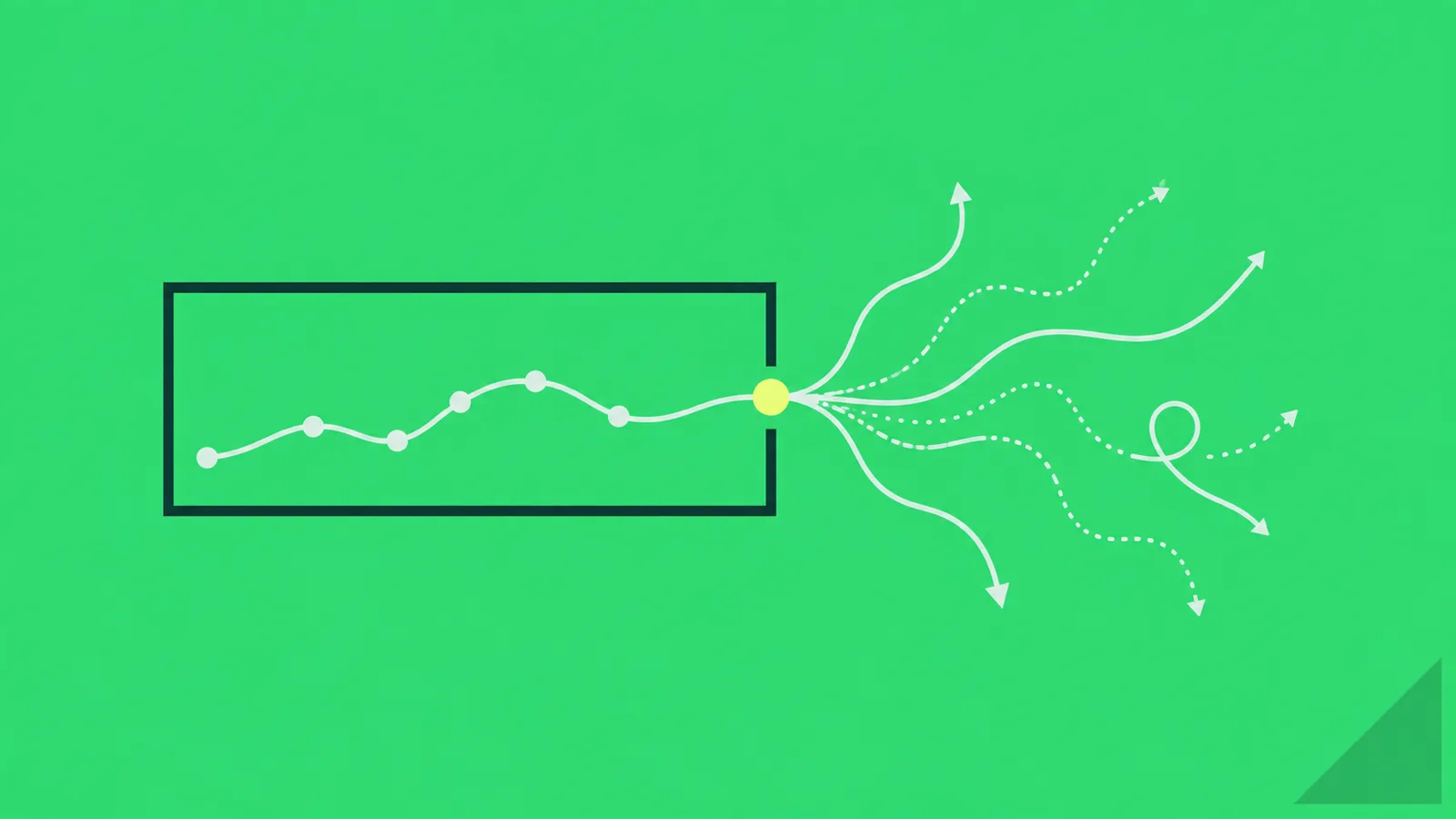
Speculation turns into gambling when the guardrails go: no plan, no loss limit, no control over emotion.
Speculation can still involve analysis, though the chance of loss stays high. Gambling leans on luck, impulse, or the urge to win back losses.
Watch for the warning signs: borrowing to trade, using money meant for living costs, raising your bets after a loss, or being unable to stop.
Speculating and gambling both involve risking money for a chance at a gain, so it is easy to treat them as the same thing. The difference is not the asset you buy. It is how you make decisions, how you manage risk, and how you respond when things go wrong.
Are speculation and gambling the same thing?
Not quite.
Both involve accepting that you could lose money in exchange for a chance to profit. What separates them is the way the decision is made.
Speculation can involve a plan, a clear rationale, and limits on risk. Gambling usually lacks those things.
A speculator might research an idea before acting, decide in advance how much loss is acceptable, have a specific reason to buy or sell, and accept that the idea could be wrong. Having a plan does not make speculation safe: a well-reasoned speculative bet can still lose money.
Gambling-like behavior, by contrast, tends to rely more on luck, emotion, or the hope that "this time will be different."
How do speculation, gambling, and long-term investing differ?
Factor | Speculation | Gambling | Long-term investing |
|---|---|---|---|
Basis for decisions | Analysis, assumptions, probabilities | Luck, emotion, the wish to win quickly | Long-term value and financial goals |
Plan | May have a clear plan | Often none, or very vague | Aims to set goals, a time frame, and an allocation |
Risk management | Aims to limit capital and losses | Limits are often ignored | Aims to use diversification and discipline |
Time frame | Short or medium term | Often very short term | Many years |
Response to a loss | Re-examines the original idea | Tries to win it back or takes more risk | Reviews the plan and goals |
Role of emotion | Can influence decisions | Often dominates | Still present and needs managing |
The table describes typical patterns, not guarantees. It does not say speculation is always wrong or that long-term investing is always right, and each approach can still lose money. Its purpose is to show the difference between a calculated decision and behavior that emotion is driving.
The market does not decide whether you are speculating or gambling
Many people assume the type of asset defines the behavior: buying stocks is investing, buying crypto is speculating, and going to a casino is gambling.
In practice it is not that simple.
The same stock can be approached in very different ways. One person buys it with a clear plan, a risk limit, and a specific reason, and may be speculating in a calculated way. Another person buys the same stock with borrowed money, only because they want to win back earlier losses after several bad trades. That person may be behaving more like a gambler.
So the line is not drawn by what you buy. It is drawn by how you think, how you manage risk, and how you react when results are not what you expected.
What turns speculation into gambling?
Usually it is not the asset but the behavior. Here are five signs to watch for.
Sign 1: You no longer know why you are in the trade
At the start you may have had a clear reason: an investment thesis, a trading plan, or a specific goal. Over time, though, you keep going simply because you are already in.
If someone asked, "Why are you still holding this?" and you could not give a clear answer, treat that as a warning sign.
For example, you buy a stock because many people say it is "about to take off." A few weeks later the price has fallen, but you keep holding because "maybe it will come back." The original reason has disappeared, yet the behavior continues.
Sign 2: You keep taking more risk to win back losses
This is one of the most dangerous signs, because it can pull you into a spiral of losses.
For example, you lose some money, want to recover it quickly, and respond by trading larger amounts and accepting more risk. At that point the goal is no longer to make good decisions. The goal has become "how do I get back what I lost?"
This impulse usually comes from emotion, not from a plan.
Sign 3: You believe you are due for a win
Have you ever thought, "I've lost so many times, I must win this time," "my bad luck can't last forever," or "one good trade will make it all back"?
This is a common mental bias known as the gambler's fallacy.
The market does not know your track record. A string of wins or losses does not, on its own, make your next decision more likely to succeed. Each new decision still has to be judged on the information and risks in front of you.
When decisions rest on a feeling that luck is about to turn rather than on a realistic assessment, the behavior is moving closer to gambling.
Sign 4: You ignore every limit you set
You told yourself you would use only a small amount, accept only a certain loss, or stop if you turned out to be wrong. Then you added more money, ignored your loss limit, or kept going after the plan had failed.
Rules that only apply when things are going well are not really rules.
Sign 5: Emotion makes the decisions instead of your plan
Ask yourself: were your recent decisions driven by analysis, by your plan, or by emotion?
If they mostly came from FOMO (fear of missing out), greed, panic, or the urge to win back losses, you are likely drifting away from calculated speculation and toward gambling.
Two biases that make it easier for beginners to cross the line
Nobody is immune to psychological biases. Beginners can be especially vulnerable because markets are new to them and full of emotion.
The gambler's fallacy
The gambler's fallacy appears when you believe that because you have lost several times in a row, the next attempt "has to" win.
In reality, the market does not know whether you just won or lost. Every new decision still needs to be assessed on current information, risk, and your plan.
If you increase your risk only because you feel you are "due" a win, that is a warning sign.
The sunk cost fallacy
The sunk cost fallacy appears when you keep holding a position, or add more money to it, only because you have already lost so much.
For example, an investment has fallen sharply and your original reason for buying no longer holds, but you keep it because "if I sell now, the loss becomes real."
Money already lost belongs to the past. Your next decision should rest on the current outlook, risks, and plan, not only on a wish to avoid admitting a mistake.
A loss does not automatically mean you are gambling
This point matters.
Losing money on an investment or trade does not, by itself, make someone a gambler. On the other hand, a person can make a profit and still be behaving like a gambler.
The outcome is not the only measure. What matters more is the decision-making process: how well you understand the risk, whether you stay consistent with your plan, and whether you can stop when your original idea no longer holds.
A loss can even be part of a strategy, for example when you exit because the plan no longer fits. Gambling is when you have no strategy left except hoping the result will improve.
Signs it is time to stop and reassess
If you notice one or more of the following, pause and review how you are approaching risk:
You borrow money to trade.
You use money meant for living expenses, tuition, rent, or your emergency fund.
You try to recover losses by trading larger amounts.
You hide your trading from family or people close to you.
You lose sleep, feel constantly stressed, or keep checking prices.
You cannot stop even after repeated losses.
You believe "this time will definitely be different" without a clear reason.
These signs are not meant to make you feel ashamed. They are signals that you may need to protect yourself before the risk grows.
The cost of gambling-like investing is not only money
When speculation turns into gambling, the damage goes beyond the money you lose.
Financial cost
You can lose your capital, use money meant for other purposes, or fall into debt if you borrowed to trade. This is a serious risk because it directly affects your daily life.
Emotional cost
Watching prices constantly, hoping to recover losses, or fearing further losses can lead to stress, sleepless nights, and guilt.
Time cost
Hours spent checking the market can take time away from studying, working, resting, or being with family.
Opportunity cost
When you are focused on recovering losses or winning quickly, you may miss the chance to build a more sustainable financial plan.
What if you realize you are gambling?
First, pause. There is no need to blame yourself. What matters is putting some distance between how you feel right now and your next decision.
Stop trading for a while so you can calm down.
Write down every reason you bought or sold, every loss, and how you felt at the time.
Decide which money you need for everyday life and should not use for trading.
Talk to someone you trust if you feel you cannot control the behavior.
Return to the basics: your goals, time horizon, risk, and plan.
If trading is causing prolonged stress or debt, leading you to hide it from people close to you, or you cannot stop, consider seeking help from an appropriate professional.
Self-check: are you speculating or gambling?
Try asking yourself:
Can I explain the reason for this decision?
Do I know what I will do if I am wrong?
Am I trying to win back losses?
Am I ignoring the rules I set for myself?
Am I making this decision because of emotion?
Do I write down my decisions, or do I rely on memory?
If several answers make you uncomfortable, it may be time to stop and reassess your approach.
Key takeaways
Speculation is not automatically gambling.
Speculation can become gambling when your plan, risk limits, and emotional control disappear.
A loss is not automatically gambling; the decision-making process is what to examine.
The gambler's fallacy and the sunk cost fallacy can keep beginners taking on unreasonable risk.
The line between speculation and gambling is not set by the asset you buy but by how you think and act.
Next step
In this lesson, you saw that speculation slides toward gambling when decisions rely mainly on luck, when you raise your stakes after a loss, or when you no longer have a loss limit. That raises a practical question: when you buy a stock, what are you actually buying, and what risks come with it? The next lesson explains what a stock represents, so you can judge an asset on what it is rather than on a tip or a feeling. A related lesson, Signs you are speculating without realizing it, can help you spot these patterns earlier.
Continue the main path: What are stocks?
Back to the core lesson: Speculation vs. long-term investing
This content is for personal finance education only and does not constitute personalized investment advice. Consider your own goals, time horizon, ability to bear losses, and financial circumstances before investing.