Investing Basics · Go deeper · Beginner
Connected to: What are stocks? Benefits, risks, and how beginners can start learning
What are fractional shares? How to buy US stocks with a small budget
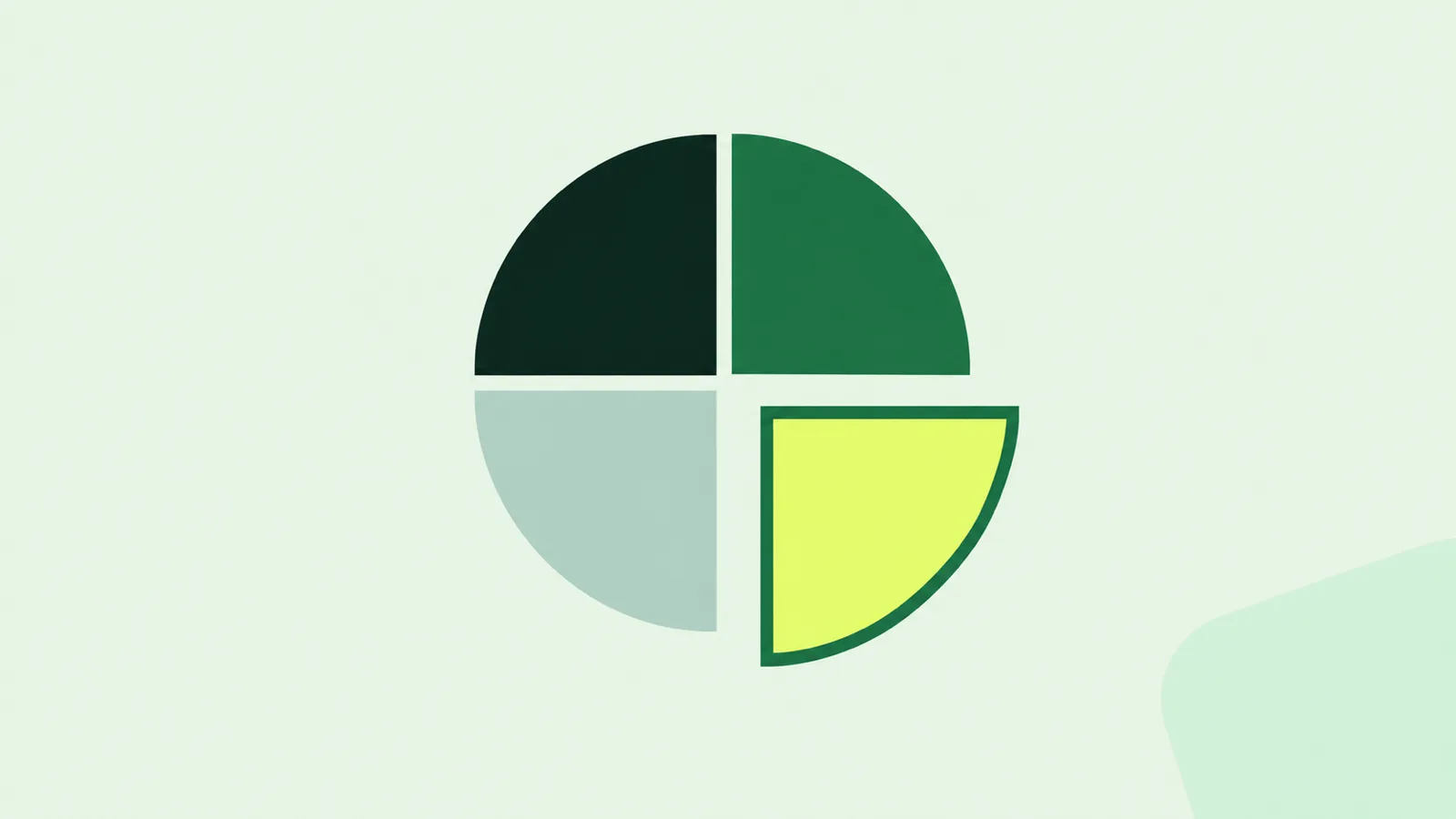
A fractional share is part of one whole share: you buy a set amount of money's worth instead of a full share.
It lowers the starting barrier: you can reach high-priced US stocks or ETFs with less money and spread a small budget across more assets.
It does not reduce risk on its own: your slice still rises and falls with the original stock or ETF, before fees, exchange rates, taxes and platform rules.
What are fractional shares?
A fractional share is a portion of one whole share. Instead of having to buy a full share, you buy a specific amount of money's worth, such as USD 10, USD 25 or USD 100.
For example, if a US stock costs USD 200 but you only want to invest USD 20, a platform that supports fractional shares may record that you own 0.1 of a share. If the share price rises or falls, your fraction rises or falls in proportion, before fees, taxes, exchange rates or price spreads.
The key point is that a fractional share is not a new kind of asset. It is a way of splitting the unit of ownership, or the unit a broker records for you, so that beginners can reach expensive shares or ETFs with less money.
A note on terms for readers in Vietnam: the Vietnamese phrase "cổ phiếu lẻ" is also used for odd-lot shares on Vietnamese exchanges, meaning a quantity of shares smaller than the standard trading lot. That is a different topic. This lesson is about fractional shares, mainly of US stocks and ETFs, where you can own less than one share.
How is a fractional share different from a whole share?
A whole share is one complete share. A fractional share is a smaller part of it, for example 0.5, 0.25 or 0.01 of a share.
In terms of price, the two usually move together. If the original share rises 5%, your fraction also rises by about 5%, before fees, spreads, taxes or platform factors.
However, fractional shares can differ from whole shares in some rights and trading conditions. Depending on the platform, you may not get full voting rights, you may not be able to transfer the fraction to another broker, or you may only be able to sell it through the platform's own internal system.
So it helps to keep two ideas separate: the underlying asset is the stock or ETF, and the fractional share is a way of accessing that asset in smaller pieces. If you are not sure how stocks work yet, review What are stocks? before going deeper into fractional products.
Why are fractional shares useful for beginners?
Fractional shares are useful because they lower the amount of money you need to get started.
In the past, if a share cost several hundred or several thousand US dollars, a beginner might have to wait a long time before buying even one. With fractional shares, you can start learning how to follow an asset, record price changes and build a habit of investing regularly with smaller amounts.
Fractional shares also make it easier to divide your money. Instead of putting your whole budget into a single stock, you can split it across several stocks or ETFs. That does not remove risk, but it can help you understand diversification in practice.
For example, with USD 100 you might not be able to buy a single share of a company with a high share price. If your platform supports fractional shares, you could put part of it into an ETF, part into an individual stock, and still keep some cash if you need it. That is a more practical way to learn than only watching prices without being able to take part at a size that suits you.
How do fractional shares work?
The exact mechanism depends on each broker or trading platform, but it usually involves three simple steps.
You place an order by amount. Instead of entering "buy 1 share", you might enter "buy USD 20" of a stock or ETF.
The platform processes the order. The broker may combine many small orders, buy whole shares on the market, and then allocate the matching portion to each customer.
Your account records the fraction. If you buy USD 20 of a share priced at USD 200, your account may show about 0.1 of a share, before factors such as fees, exchange rates or the execution spread.
The thing to remember is that fractional shares often depend heavily on the broker's own systems. Read the terms on order execution, selling, transferring assets, shareholder rights, dividends and fees carefully. For general points to watch, see FINRA's guidance on investing in fractional shares. FINRA is the US self-regulatory body for brokerage firms.
How do dividends and shareholder rights work?
If the underlying stock or ETF pays dividends, your share of the dividend is usually calculated in proportion to what you own. If you own 0.1 of a share, your dividend before tax and fees usually equals 10% of the dividend on one share.
How you receive it can vary between platforms. Some pay cash, some support automatic dividend reinvestment, and some may apply a minimum threshold or a rounding policy. A company may also cut or stop its dividend, so a fraction does not give you a guaranteed payment. To learn more about how companies share profits with shareholders, see the dividends lesson in this module.
Voting rights need to be checked separately. Not every platform passes full voting rights to fractional owners. This matters because it shows you need to look beyond the purchase price to the real rights attached to what you own.
What are the risks of fractional shares?
Fractional shares let you start with less money, but they do not make shares a completely safe asset.
Market risk: if the underlying stock or ETF falls, your fraction falls too. Buying a small piece does not make price swings disappear.
Concentration risk: because fractional shares make it easy to buy well-known brands, beginners can get drawn into a few familiar names and forget to diversify.
Fee and spread risk: some platforms charge trading fees, currency conversion fees, buy-sell spreads or minimum fees. On a small investment, fees can take up a significant share of your money.
Exchange-rate risk: for investors in Vietnam buying US stocks, assets are usually priced in USD. When you convert back to VND, your result can be affected by movements in the USD/VND exchange rate.
Platform and custody risk: you need to understand in whose name the asset is held, how it is kept in custody and how it is protected. Fractional shares may have different transfer conditions from whole shares.
Risk of misunderstanding the product: not every product that "tracks a stock" is a real share. Some may be CFDs, derivatives or internal bookkeeping entries. That is why it is worth learning how to tell real shares, CFDs and other synthetic products apart.
Are fractional shares right for everyone?
Fractional shares are not always a suitable choice. They can be useful for learning and for starting small, but it is worth asking yourself a few questions before using real money:
Do I already have an emergency fund?
Is this money I do not need for other plans?
Am I buying a real share, an ETF, or some other synthetic product?
Do I understand the trading fees, currency fees, taxes and exchange rates?
Can I accept my investment falling in value in the short term?
Do I know where the asset is held and what my shareholder rights are?
If you cannot answer these yet, it is completely normal to keep learning before you invest. Think of fractional shares as a tool that makes investing easier to access and learn, not as a reason to buy an asset before you understand its risks.
How do fractional shares relate to the S&P 500 and ETFs?
Fractional shares are not only for individual stocks. Some platforms also let you buy fractions of ETFs, including ETFs that track an index such as the S&P 500.
That means a beginner can use a small amount to get exposure to an ETF without buying a full unit of the fund. You still need to understand what an ETF is, what an index is, what the fund charges, and whether the product really holds the underlying assets or tracks them in another way.
For investors in Vietnam, the lesson on investing in US stocks from Vietnam puts fractional shares in a wider context of fees, exchange rates, taxes, custody and platform risk.
Next step
Fractional shares let you start with a smaller amount, but the rights, fees and trading rules still need checking on the platform you use. Once you know how to own part of a company in small pieces, a fair question is what other ways there are to put money to work besides owning shares. The next lesson on the main path explains bonds, where you lend money to an issuer in exchange for interest instead of owning part of a business.
Continue the main path: What are bonds?
Back to the core lesson: What are stocks?
This content is for personal finance education only and does not constitute personalized investment advice. Consider your own goals, time horizon, ability to bear losses, and financial circumstances before investing.