Investing Basics · Go deeper · Intermediate
Connected to: What are stocks? Benefits, risks, and how beginners can start learning
Real shares vs CFDs vs synthetic products: what is the difference?
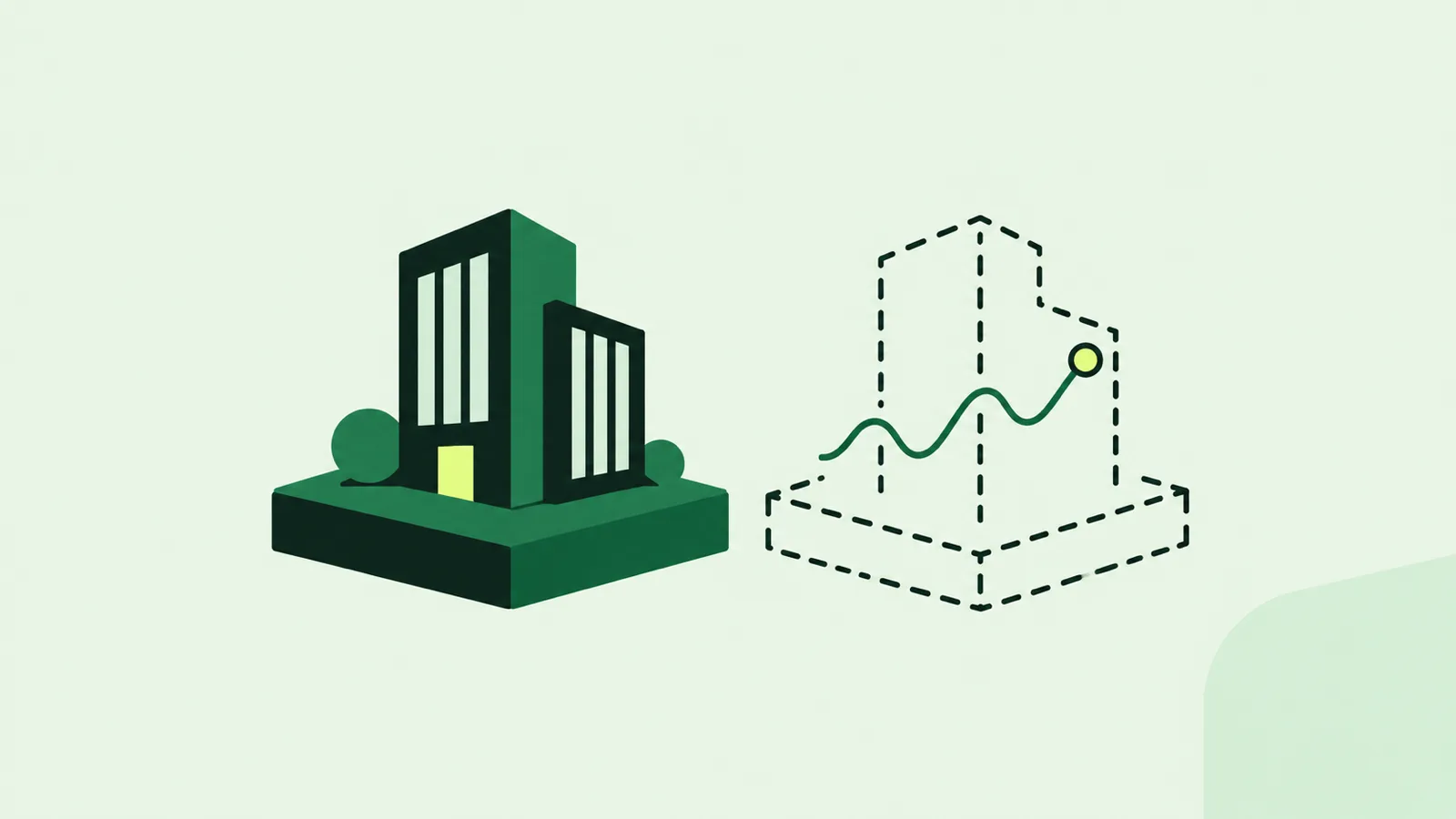
Same ticker, different product: a real share, an ETF unit and a CFD can show the same name and chart, but they differ in ownership, pricing, leverage and who carries the risk.
Check what you actually hold: owning the underlying asset gives you different rights and risks from trading a contract that only tracks its price.
Read the costs and terms first: look at fees, leverage, custody, volatility and how large a loss could be before you choose a platform or product.
The question many beginners skip
When you see a stock or an ETF in an investing app, it is natural to think about potential returns first. A more important question comes before that:
Am I buying the real asset, or a product that only imitates its price?
Imagine you see any of these on a screen:
Apple shares (AAPL).
An ETF that tracks the S&P 500.
Tesla's price moving up or down.
Different platforms can display exactly the same information, yet the product behind it can be completely different. That is why it helps to understand the difference between real shares, CFDs and other synthetic products before going further into international investing.
What is a real share?
When you buy a real share, you own a small part of a company.
If you buy Apple shares through a platform that gives you genuine ownership, you become an Apple shareholder in proportion to the number of shares you hold. That means:
You own the underlying asset.
You may receive dividends if the company pays them.
Over the long term, the value of your investment is linked to how the business performs.
The key point: you own the asset itself, not just exposure to its price movements. If you want to revisit the basics first, read What are stocks? before looking at derivatives or synthetic products.
What is a CFD?
A CFD (contract for difference) is an agreement between you and a provider to exchange the difference in the price of an asset, such as a share, an index or gold, between the moment you open a position and the moment you close it. You do not own the asset, you do not become a shareholder, and the trade usually uses leverage.
In other words, trading a CFD is not buying a share. You sign a contract with the CFD provider, and the value of that contract rises or falls with the price of the underlying asset. For example:
You open a CFD on Tesla's share price.
Tesla's price goes up.
The value of your CFD rises with it.
You close the position and receive the difference.
At no point do you own Tesla shares. You are only party to a contract that mirrors the share's price movements.
People often hear "the CFD market" and picture an exchange like a stock exchange. In practice, CFDs are usually traded directly with the provider, which is known as over-the-counter (OTC) trading. The provider sets the price, fees and contract terms; orders are not matched on an exchange. That makes the provider's reliability and license far more important.
What other synthetic products are there?
CFDs are only one type of synthetic or derivative product. Depending on the market, you may come across:
CFDs (contracts for difference): contracts that track an asset's price movements.
Futures: contracts to buy or sell an asset at a set date in the future.
Options: products that give the holder the right, but not the obligation, to buy or sell an asset under certain conditions.
Warrants: instruments that give exposure to an asset's price movements under their own specific rules.
Structured products: products that combine several financial instruments to create a particular mix of return and risk.
Synthetic products: products that replicate an asset's performance without necessarily owning that asset.
These products work in different ways, but they share one feature: you can gain exposure to price movements without directly owning the underlying asset.
A virtual trading or stock-market simulator is different again from a CFD. It uses play money for practice only: you deposit no real money and buy or sell no real assets.
Quick comparison: real shares vs CFDs
Criterion | Real shares | CFDs |
|---|---|---|
Own part of the company | Yes | No |
Become a shareholder | Yes | No |
Own the asset | Yes | No |
Receive dividends | Possibly | Depends on contract terms |
Leverage | Usually optional | Usually included |
Long-term holding | Possible | Usually less common |
Overnight fees | Uncommon | May apply |
Counterparty risk | Depends on the custody model and platform | Depends heavily on the contract provider |
This table does not say one product is always better than the other. It shows that real shares and CFDs are two very different structures.
How are CFDs different from ETFs?
An ETF (exchange-traded fund) is an investment fund listed on an exchange. When you buy ETF units, you own a share of the fund, and the fund holds the basket of assets in the index it tracks, for example the S&P 500.
A CFD on the same index is only a contract that follows the price of the index or of that ETF. You do not own any fund units, your result depends on the provider's terms, and holding the position for a long time usually means paying overnight fees. On many platforms, a CFD on the S&P 500 index is labeled "US500".
Put simply: an ETF is a way to own a basket of assets, while a CFD on an ETF or index is a way to trade the price movements of that basket. If you are not yet sure how ETFs work, it is worth learning that first.
Why do beginners mix them up?
An app may show:
the same ticker symbol;
the same price chart;
the same company name.
So it is easy to assume the products are identical. In reality, one platform might offer real shares, another CFDs, and a third a synthetic product or some other derivative. The same asset on screen does not mean the same product.
This matters especially if you are looking into investing in US stocks from Vietnam, because each platform may use a different product model, fee structure, custody arrangement and set of terms.
How is custody different?
Custody is often the point people only discover after they have already invested.
When you buy real shares, the asset is usually recorded and held through a system of custodians, brokers and other market institutions. With a CFD, there is usually no actual share bought and held on your behalf. What you hold is a contract with the product provider.
That raises an important question: if the platform runs into trouble, where are your assets? It is a question worth asking about any platform before you put money into it.
Why are CFDs often marketed as having advantages?
CFD platforms tend to highlight points such as:
Leverage: you only need to put up a margin deposit for part of the position's value.
Short selling: you can trade on prices falling, not only rising.
Many markets in one place: shares, indices and commodities on a single platform.
A small starting amount: the capital needed can look modest.
Each of these has a matching downside. Leverage makes losses grow faster, short selling can lose money when prices rise, and a small amount of capital does not mean a small amount of risk. That is why it is worth reading the risks below before looking at the advantages.
Risks to understand before using synthetic products
Leverage risk
Many CFDs let you use leverage. Leverage can magnify gains, but it can also magnify losses. A small market move can produce a result much larger than your initial capital, and depending on the product terms, your loss could exceed the amount you planned to use for the trade.
Counterparty risk
When you trade a CFD, you depend on the product provider. Your position can be affected by the contract terms, how the provider operates and whether it can meet its obligations to you.
Cost risk
Some synthetic products can involve:
overnight fees;
the spread between buying and selling prices;
financing charges;
other trading costs;
dividend adjustments or other contractual adjustments.
These costs can add up significantly over time, especially if you hold the product for longer than you expected.
Risk of misunderstanding the product
This is the most common risk of all. Many people believe they own real shares when they are actually trading a product that only mimics the price.
Are real shares always better than CFDs?
Not necessarily. The question is not which product is better in every situation, but which one fits your goal.
If your goal is to:
understand the businesses you invest in;
build wealth over the long term;
benefit from a company's growth over time;
hold assets in a way that is easier to understand,
then real shares usually match that goal more closely.
If your goal is to trade short-term price movements, some synthetic products are designed for that purpose. They generally require you to understand the mechanics, fees, leverage, contract terms and counterparty risk well. What matters most is knowing exactly which product you are using.
Questions to ask yourself before choosing a product
Do I understand what I actually own?
Am I investing for the long term or trading for the short term?
Do I understand how this product works?
Does the product use leverage?
Do I understand all the fees involved?
Do I understand how tax, exchange rates and contract terms could affect me?
Do I understand how the asset or contract is held and managed?
If the platform runs into trouble, what happens to my position?
If you cannot answer these questions yet, taking more time to learn is completely normal.
Next step
A product's name and screen can look the same, but owning a real share is not the same as holding a CFD or another synthetic product. Once you can tell ownership from price exposure, a natural next question is what other kinds of assets you can own besides company shares. The next lesson on the main path looks at bonds, where you lend money to an issuer instead of owning part of a business.
Continue the main path: What are bonds?
Back to the core lesson: What are stocks?
This content is for personal finance education only and does not constitute personalized investment advice. Consider your own goals, time horizon, ability to bear losses, and financial circumstances before investing.