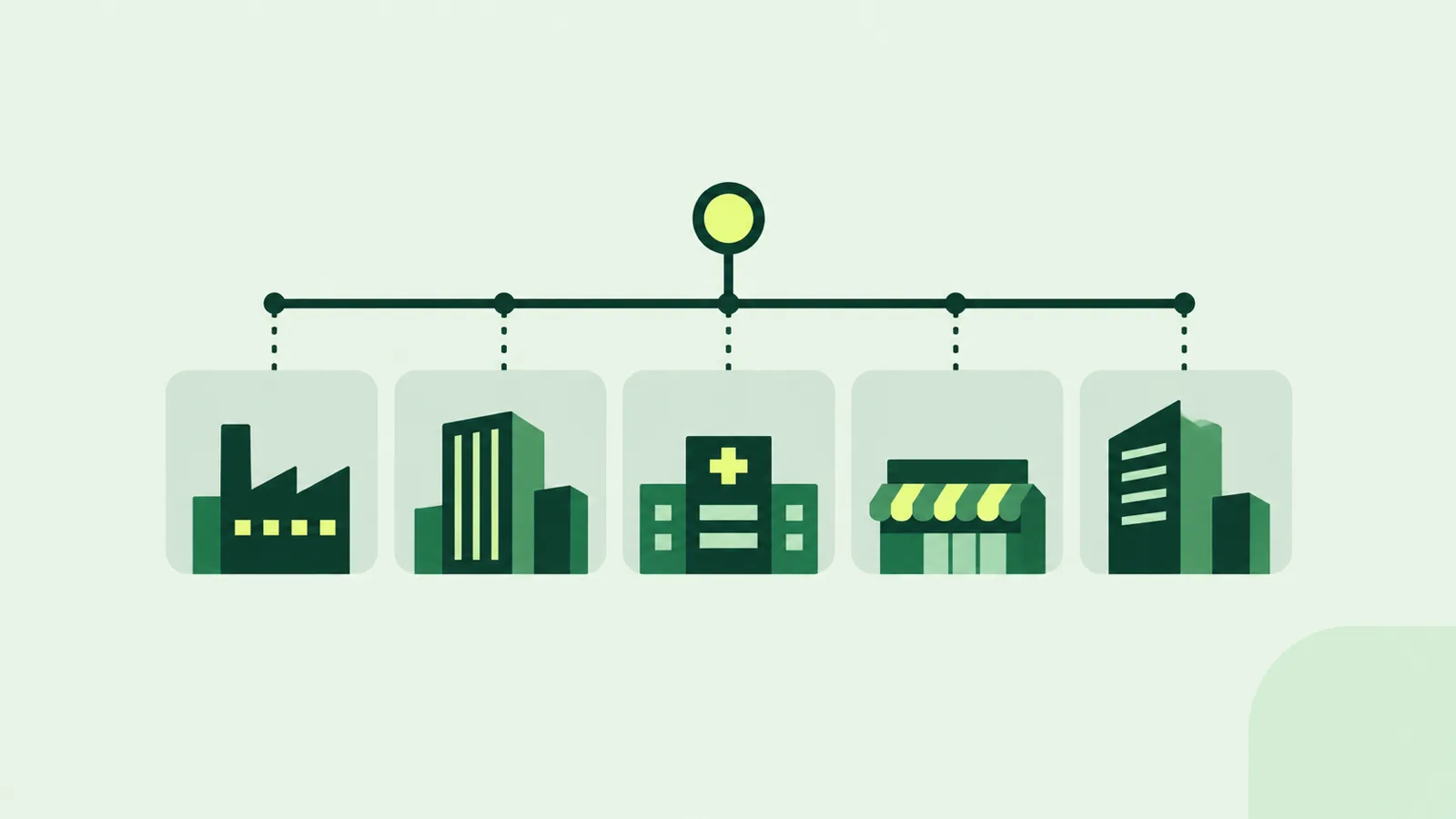
An index is a measuring tool: it tracks how a group of stocks performs, using a fixed set of rules.
You cannot buy an index directly: it is not a stock or a fund, so investors usually reach it through a product such as an ETF that tracks it.
The rules shape the result: how stocks are chosen and weighted explains why two indices covering the same market can move differently.
Know the limits before you invest: an index covers only part of a market, past performance does not guarantee future results, and products that track an index carry their own fees and risks.
What is a stock market index?
A stock market index is a tool for tracking how a group of stocks is performing.
Think of it as a scoreboard for the market. Instead of checking each stock one by one, an index lets you see how a whole group of companies is doing at once.
For example:
VN30 tracks 30 large, highly liquid stocks on Vietnam's stock market.
S&P 500 tracks around 500 large companies in the United States.
Nasdaq-100 tracks a group of large companies listed on the Nasdaq exchange, many of them technology companies.
When a news report says "US stocks rose 1% today", it is usually talking about one or more indices that represent the market. It does not mean every stock went up by 1%.
The key point to remember: an index is a measurement, not a stock or an investment fund.
If you are not yet familiar with stocks, the building blocks most indices track, start with What are stocks?
How does a stock market index work?
An index starts with a group of stocks selected according to set criteria. The index provider then applies a calculation method to work out the index's value.
Every index has its own rules:
It might track 30, 100, 500 or more companies.
Some indices give more weight to larger companies.
Some focus on a single sector, such as technology, finance or energy.
Some aim to represent a broader market.
That is why two different indices can produce very different results, even when both are measuring the stock market.
How is an index calculated?
Not every index is built the same way. When you see an index rise or fall, it helps to know how that index assigns weight to the stocks inside it.
Market-capitalization-weighted indices
This is the most common approach today. Market capitalization is a company's total market value, so larger companies have a bigger influence on how the index moves.
The S&P 500 and VN30 both use a method based on market capitalization. If a very large company rises or falls sharply, its effect on the index is usually bigger than that of a smaller company.
Equal-weighted indices
In an equal-weighted index, each company carries roughly the same weight regardless of its size.
This reduces concentration in the biggest companies, but it can also make the index behave differently from a traditional market-cap-weighted index.
Price-weighted indices
Some long-established indices, such as the Dow Jones, are calculated from share prices.
Here, a stock with a higher share price has more influence on the index, even if the company itself is not larger.
You do not need to memorize every calculation method. What matters is understanding that two indices can follow the same market and still show different results, because they are built on different rules.
An index is not a stock or a fund
This is one of the most common beginner mix-ups. Many people hear "S&P 500" and assume it is a kind of stock they can buy and sell directly.
In reality:
Term | What it is |
|---|---|
Stock | Ownership of a part of a company |
Index | A measure of how a group of stocks performs |
ETF | An investment fund that can be designed to track an index |
For example:
The S&P 500 is an index.
An ETF that tracks the S&P 500 is an investment product.
Investors usually buy the ETF, not the index itself.
Keeping the concept and the product separate is one of the foundations of the investing basics lessons on Tekoversity.
Why do stock market indices exist?
If you want to know whether the market is going up or down, you cannot check hundreds or thousands of stocks every day. An index makes following the market much simpler.
Indices are also used to compare investment results and to build investment products that track an index.
Comparing investment results
Many investors compare their portfolio with a reference index, often called a benchmark.
For example, if your portfolio rose 5% in a year while the S&P 500 rose 10%, you might ask whether your strategy is working as intended.
That does not mean every portfolio has to beat an index. Each person has different goals, time horizons and levels of risk. But an index gives you a reference point for judging your results more fairly.
Building ETFs and index funds
This is why beginners so often meet indices when they start learning about ETFs. Many ETFs are designed to track a specific index, for example:
an ETF tracking the VN30
an ETF tracking the S&P 500
an ETF tracking the Nasdaq-100
Once you know what an index tracks, you have a much clearer picture of what a fund that follows it holds.
However, an ETF does not always match its index exactly. In practice, its performance can differ slightly because of fund operating costs, dividends, liquidity and imperfect replication. This gap is known as tracking error.
That is why it is worth understanding both the index and the ETF, rather than judging a fund by its name alone. The next core lesson, What is an ETF?, explains how ETFs work.
Common indices beginners come across
VN30
The VN30 is made up of 30 large, highly liquid stocks on Vietnam's stock market. It is one of the most widely followed indices among domestic investors.
S&P 500
The S&P 500 tracks around 500 large US companies. It is one of the most frequently mentioned indices in long-term investing and a common example when beginners learn about index ETFs.
Nasdaq-100
The Nasdaq-100 tracks a group of large companies listed on the Nasdaq exchange, many of them in technology.
It is not the same as the whole US market. If you only look at the Nasdaq-100, you may be looking at a slice of the market that is more concentrated in certain sectors.
Dow Jones
The Dow Jones tracks 30 large US companies and has a very long history. Although it is famous, it is generally seen as a narrower measure of the US market than the S&P 500.
Indices change over time
A common misunderstanding is that an index always contains the same companies.
In fact, many indices are reviewed and adjusted regularly so they keep reflecting their original criteria. If a company no longer meets the requirements for size, liquidity or other rules, it may be removed and replaced by one that fits better.
This means major indices such as the S&P 500 and VN30 are not fixed lists. Their members can change over time as the market changes. It is also one reason many index ETFs adjust their holdings from time to time, so they can keep tracking their index.
Is a stock market index risky?
An index is a measuring tool, so it does not carry risk in the way an investment product does. You cannot lose money on the index itself. However, its value can fall, and products that track an index can lose value when the market falls.
Beginners should also understand some limits of indices.
It does not reflect the whole market
The S&P 500 reflects only part of the US market. The VN30 does not represent every listed company in Vietnam either.
It can be concentrated in a few companies
Some indices give a large weight to a handful of companies or sectors. When that happens, moves in those few large companies can have a big effect on the whole index.
Past performance does not guarantee future results
An index that has grown well in the past will not necessarily keep doing so. Historical data can help you understand the market, but it should never be treated as a promise of returns.
Index products carry their own risks
If you invest through an ETF or index fund, your risk does not come only from the index. You also need to understand the fund's fees, liquidity, how it tracks the index, its dividend policy, the trading platform you use, and how your assets are held in custody.
What should investors in Vietnam know about indices?
If you are exploring international investing, especially the US market, you will often come across indices such as the S&P 500 and the Nasdaq-100. Keep these points in mind:
An index is not an investment product.
An ETF is not an index.
Each ETF has its own costs, way of operating and risks.
Investing in a product that tracks an index still involves market risk, currency risk and product risk.
For investors in Vietnam, if an ETF or index fund is priced in US dollars, the USD/VND exchange rate can affect your result once it is converted back into VND. Your return in VND can differ from the fund's return in USD.
When looking at products linked to the US market, also check the fees, taxes, the legal entity providing the service, how your assets are held in custody, and platform risk. Investing in US stocks from Vietnam explains this context in more detail.
Is learning about indices right for everyone?
Understanding stock market indices is useful background for almost anyone starting to learn about investing. But understanding indices does not mean you need to invest right away.
Before investing in any ETF or fund that tracks an index, ask yourself:
Do I already have an emergency fund?
Am I using money I need for short-term spending?
Do I understand how the product I plan to buy works?
Can I accept that its value may fall in the short term?
Do I understand the fees, taxes, exchange rate, custody arrangements and platform risks?
If the answer to any of these is not yet clear, taking more time to learn before investing is completely normal.
Next step
An index lets you follow how a group of stocks is doing, but it is only a number: you cannot buy it directly. That raises a practical question: how do investors actually get exposure to the stocks an index measures? The next lesson explains what an ETF is, how a fund holds real assets, and how it can be designed to track an index.
Continue the main path: What is an ETF?
This content is for personal finance education only and does not constitute personalized investment advice. Consider your own goals, time horizon, ability to bear losses, and financial circumstances before investing.