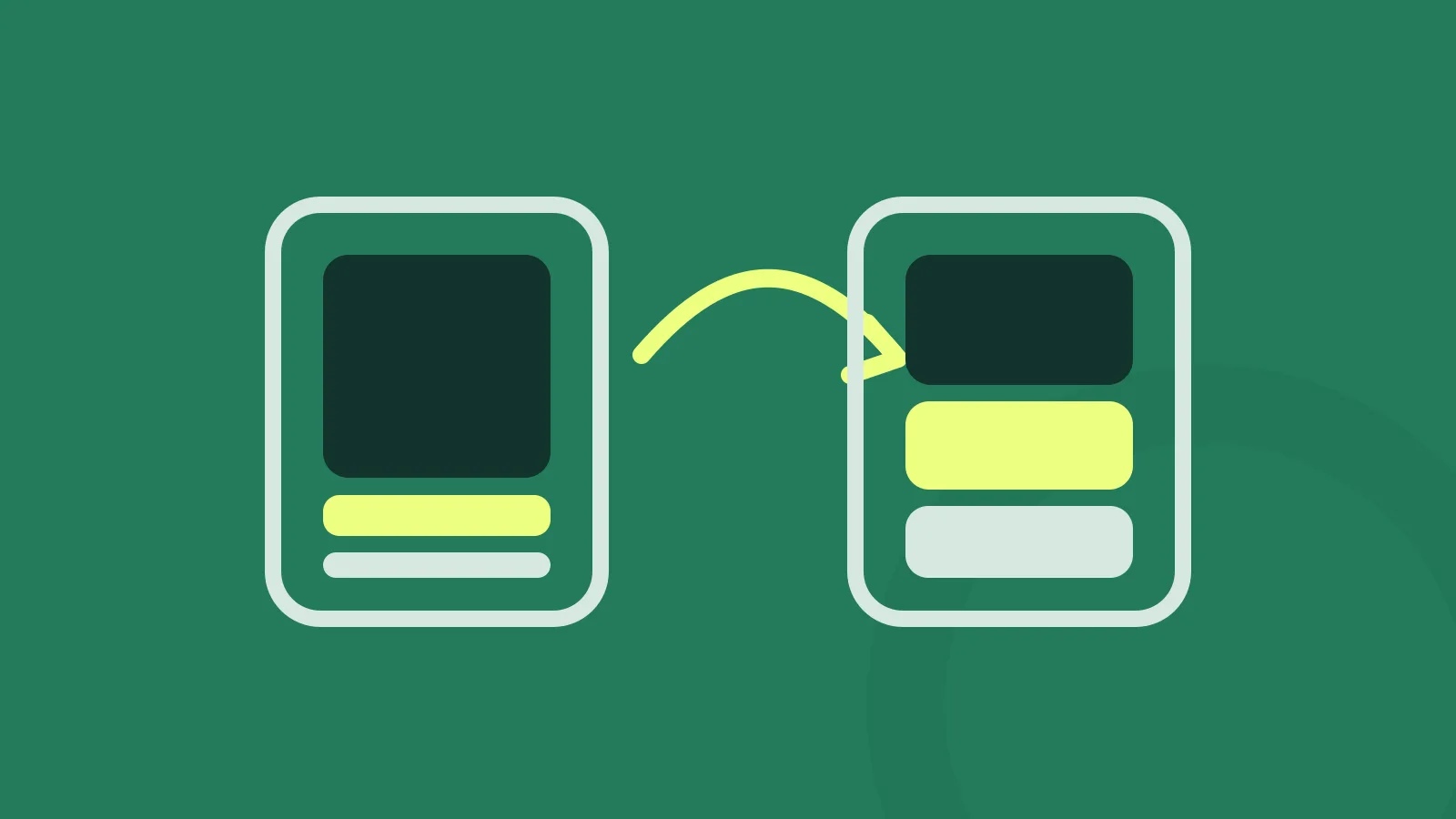
Rebalancing brings your mix back toward your plan: it means adjusting how much of your portfolio sits in each asset so the weights return close to the targets you set.
Markets move your weights for you: when one asset rises or falls faster than the rest, your portfolio can drift to a level of risk you never chose.
It is a risk tool, not a market forecast: you adjust because the portfolio has moved away from your plan, not because you know where prices are heading next.
It has real trade-offs: rebalancing can lower returns in some periods and can bring trading costs, tax questions and hard emotional decisions.
Next lesson: You have gone from diversification to asset allocation and rebalancing, and the Global Investing module starts with What is global investing?, which looks at investing beyond a single country.
What is portfolio rebalancing?
Rebalancing means adjusting the weights of the investments in your portfolio so that it returns to a mix you decided on in advance.
Say you start with this hypothetical portfolio:
70% stock ETFs
30% cash or less volatile assets
After a while, the ETFs rise sharply and the portfolio now looks like this:
75% stock ETFs
25% cash
Your portfolio is now riskier than you planned, because the more volatile part makes up a bigger share of it.
Rebalancing means bringing the portfolio back close to 70/30. You could sell some of the ETFs, add money to the cash portion, or put new money into whichever part is now below its target.
Put simply, rebalancing keeps your portfolio in line with your own plan, instead of letting the market decide how much risk you carry.
Why do portfolio weights change over time?
Different assets rarely rise and fall at the same pace. Over the same period:
Individual stocks might rise sharply.
An ETF might rise more modestly.
Cash barely changes in value, although inflation can still reduce what it buys.
One sector or one market might grow faster than the others.
When an asset grows faster than the rest, it takes up a larger share of your portfolio. When it falls further, its share shrinks.
Without noticing, you can end up taking more risk, or less risk, than you originally intended. Rebalancing is a way to bring the portfolio back to the level of risk you decided suits you.
A simple rebalancing example
Suppose you invest VND 100 million with a hypothetical target of 70% stock ETFs and 30% cash.
Point in time | Stock ETFs | Cash | ETF weight | Cash weight |
|---|---|---|---|---|
At the start | VND 70 million | VND 30 million | 70% | 30% |
After some time | VND 90 million | VND 30 million | 75% | 25% |
After rebalancing | VND 84 million | VND 36 million | 70% | 30% |
After the ETFs rise, the whole portfolio is worth VND 120 million. To return to 70/30, the ETF portion would need to be VND 84 million and the cash portion VND 36 million.
In practice, that means selling about VND 6 million of ETFs and moving it into cash, if selling makes sense once you account for costs, taxes and your own plan.
The point is not to squeeze out the highest short-term return. The point is to keep the portfolio consistent with your long-term plan.
Does rebalancing mean selling what is going up?
Sometimes it does, but that is not the main purpose. Many people ask:
If an asset is doing well, why would I sell any of it?
Rebalancing does not mean selling a rising asset because you are sure it will fall. You sell only part of it, and only if needed, to keep the portfolio in balance.
If that asset keeps rising, the part you still hold continues to benefit. If it falls after a strong run, you have already reduced how much your portfolio depends on that single asset.
Rebalancing is a way to manage risk. It is not a prediction about the market.
Why is rebalancing hard psychologically?
Rebalancing sounds simple, but it can be hard in practice because it often runs against your instincts.
When an asset is rising, you may not want to sell any of it for fear of missing out. When an asset is falling, you may not want to buy more because it feels worrying.
Emotions often push investors to act too late or too fast. A rebalancing plan can add some discipline, because it brings you back to a more important question: does this portfolio still fit my goals, my time horizon and my ability to handle risk?
What are the main ways to rebalance?
Rebalancing on a schedule
You pick fixed dates to review your portfolio, for example every 6 or 12 months.
This approach is simple and can be easier to follow if you do not want to watch the market all the time.
Rebalancing at a threshold
You adjust only when a weight drifts too far from its target. For example, in a hypothetical plan:
The target for stock ETFs is 70%.
You consider rebalancing only if ETFs rise above 75% or fall below 65%.
This approach can mean fewer trades, but it requires you to check your portfolio more closely.
Rebalancing with new money
Instead of selling what you already own, you direct new contributions to the part of the portfolio that is below its target.
For example, if your cash portion is below target, new money could go into cash rather than into more ETFs.
This can be useful for long-term investors because it can limit unnecessary trades. But if the portfolio has drifted a long way, new money alone may not be enough to bring it back to target quickly.
Comparing the rebalancing methods
Method | Strengths | Limitations | Often used by |
|---|---|---|---|
On a schedule | Simple, easy to remember and to carry out | You may rebalance when the drift is still small | Beginners and passive investors |
At a threshold | You act only when the portfolio has drifted a lot | Needs more frequent monitoring | People used to managing a portfolio |
With new money | Can reduce the need to sell | Can take time to get back to target weights | People who invest regularly over the long term |
No method is best for everyone. The right fit depends on the size of your portfolio, trading costs, your time horizon and how closely you want to follow your investments.
How to rebalance a portfolio in 5 steps
Step 1: Know your target weights
Before you rebalance, you need to know what your target portfolio is. A hypothetical example:
70% stock ETFs
20% bonds or less volatile assets
10% cash
These targets should come from your financial goals, time horizon and ability to bear risk, not be copied mechanically from someone else.
Step 2: Check your current weights
Look at the current value of each part of your portfolio. A statement, a portfolio-tracking app or a simple spreadsheet is enough.
Step 3: Compare them with your targets
If your stock target is 70% but stocks now make up 78%, your portfolio is riskier than you planned.
If stocks have fallen to 60%, your portfolio may be more cautious than you planned.
Step 4: Choose how to adjust
You could:
Sell some of whatever is above its target weight.
Buy more of whatever is below its target weight.
Use new money to top up the part that is short.
Combine these if needed.
Step 5: Write down your decision
Note when you rebalanced, why you adjusted and what the weights were afterwards.
Keeping a record helps you avoid acting on emotion and gives you something concrete to look back on when you review your plan later.
Rebalancing in rising and falling markets
In a rising market, riskier assets such as stocks or stock ETFs can grow quickly and take up too large a share. Rebalancing may then mean selling part of what has risen sharply, to reduce concentration risk.
In a falling market, your stock portion may drop below its target weight. Rebalancing may then mean buying more of what has fallen, if your long-term plan and your ability to bear risk have not changed.
This does not mean you should always buy when markets fall or sell when they rise. Rebalancing only makes sense when you already have a clear allocation plan and understand the risks of each asset.
How is rebalancing with ETFs different from individual stocks?
Rebalancing with ETFs is often simpler, because many ETFs already spread money across a number of holdings. How diversified an ETF is depends on what it holds, though: a fund that tracks one sector or one country can still be concentrated. With ETFs, you can adjust between broad groups of assets, such as stock ETFs, bond ETFs and cash.
With individual stocks, rebalancing is more complicated. A single stock that rises sharply can quickly take up a large part of your portfolio. A stock that falls sharply can also pull the portfolio away from your plan.
If you are new to investing, keep these ideas separate:
An ETF is a product that can hold many assets inside it.
An individual stock is a share of ownership in one specific company.
Rebalancing is the process of managing the weights between assets or groups of assets.
Rebalancing does not make a portfolio completely safe. It only helps you keep your weights under control according to a clear plan.
How can rebalancing help beginners?
Risk that stays closer to your plan
Your portfolio reflects your plan rather than just the market's short-term moves. Rebalancing does not remove market risk; it keeps your mix of risks closer to what you chose.
More disciplined investing
You act on rules you set in advance, instead of reacting to news or feelings.
Less chasing of hot assets
Many people are tempted to keep buying whatever has risen sharply, out of fear of missing out. Rebalancing can stop your portfolio from becoming more and more concentrated in a few investments.
A clearer picture of what you own
When you rebalance, you have to look at what you own, how much of each you hold and where your risk sits.
A better fit with long-term goals
For many long-term investors, managing risk matters as much as seeking returns.
What are the risks and limits of rebalancing?
Rebalancing is not a perfect solution.
It can lower returns in some periods: if an asset keeps rising strongly after you reduce its weight, your short-term result may be lower than if you had left it alone.
It can cost money to trade: some platforms or products charge buying or selling fees, have a spread between buying and selling prices, or charge for currency conversion.
It can have tax consequences: when you sell an asset at a profit, you may need to find out what tax applies. Tax rules can differ by product, by market and by each person's tax residency.
It does not protect you from a falling market: if the whole market drops, rebalancing does not guarantee that your portfolio avoids losses.
It is easy to overdo: adjusting too often can lead you to trade more than necessary and to overreact to short-term swings.
What should investors in Vietnam keep in mind?
If you invest from Vietnam and hold international assets such as US stocks or US ETFs, rebalancing can involve a few extra factors.
The USD/VND exchange rate: if an asset is priced in USD, your result in VND can be affected by changes in the exchange rate.
Trading and currency conversion fees: buying and selling international assets can involve trading fees, platform fees, spreads, or the cost of converting currency.
Tax and tax reporting: dividends, gains from selling assets or other income from international investing may carry different tax obligations. If you are new to this, check official sources or a tax professional before making a decision.
Custody and platforms: you need to understand where your assets are held, which legal entity operates the platform and what happens if the platform runs into problems.
What you actually hold: ETFs, individual stocks, funds, synthetic products and derivatives work differently and carry different risks. Only rebalance when you understand the products you are adjusting.
For these reasons, a rebalancing plan should be based on your own financial situation, not on one ratio applied mechanically to everyone.
Key points to remember
Rebalancing adjusts your portfolio's weights to keep it close to your original plan.
It is a risk-management tool, not a way to predict the market.
Three common approaches are rebalancing on a schedule, at a threshold or with new money.
Rebalancing can support discipline, but it can also bring costs, taxes and psychologically hard decisions.
Before you rebalance, make sure you understand your goals, time horizon, emergency fund, the products you hold and your ability to bear risk.
Is portfolio rebalancing right for everyone?
Not necessarily. Before you build a rebalancing plan, ask yourself:
What am I investing for?
How long will I be investing?
Do I have an emergency fund yet?
Can I accept large swings in value in the short term?
Do I understand the assets in my portfolio?
Do I know the costs, taxes, exchange-rate effects and platform risks involved?
Am I disciplined enough to follow a plan instead of changing it whenever my feelings change?
No portfolio mix suits everyone. What matters more is that your portfolio fits your own circumstances and your own ability to bear risk.
Next step
You have now finished the main path of Portfolio Building: why diversification matters, how target weights are set, and when to review those weights through rebalancing. Once you can keep a portfolio close to its plan, a wider question follows: what changes when some of your investments sit outside Vietnam, in other currencies and markets? The first lesson of the next module looks at global investing and what it adds to the picture.
Continue the main path: What is global investing?
This content is for personal finance education only and does not constitute personalized investment advice. Consider your own goals, time horizon, ability to bear losses, and financial circumstances before investing.