Investing Basics · Go deeper · Beginner
Connected to: What is total return?
How investment costs affect your returns, and why small fees add up
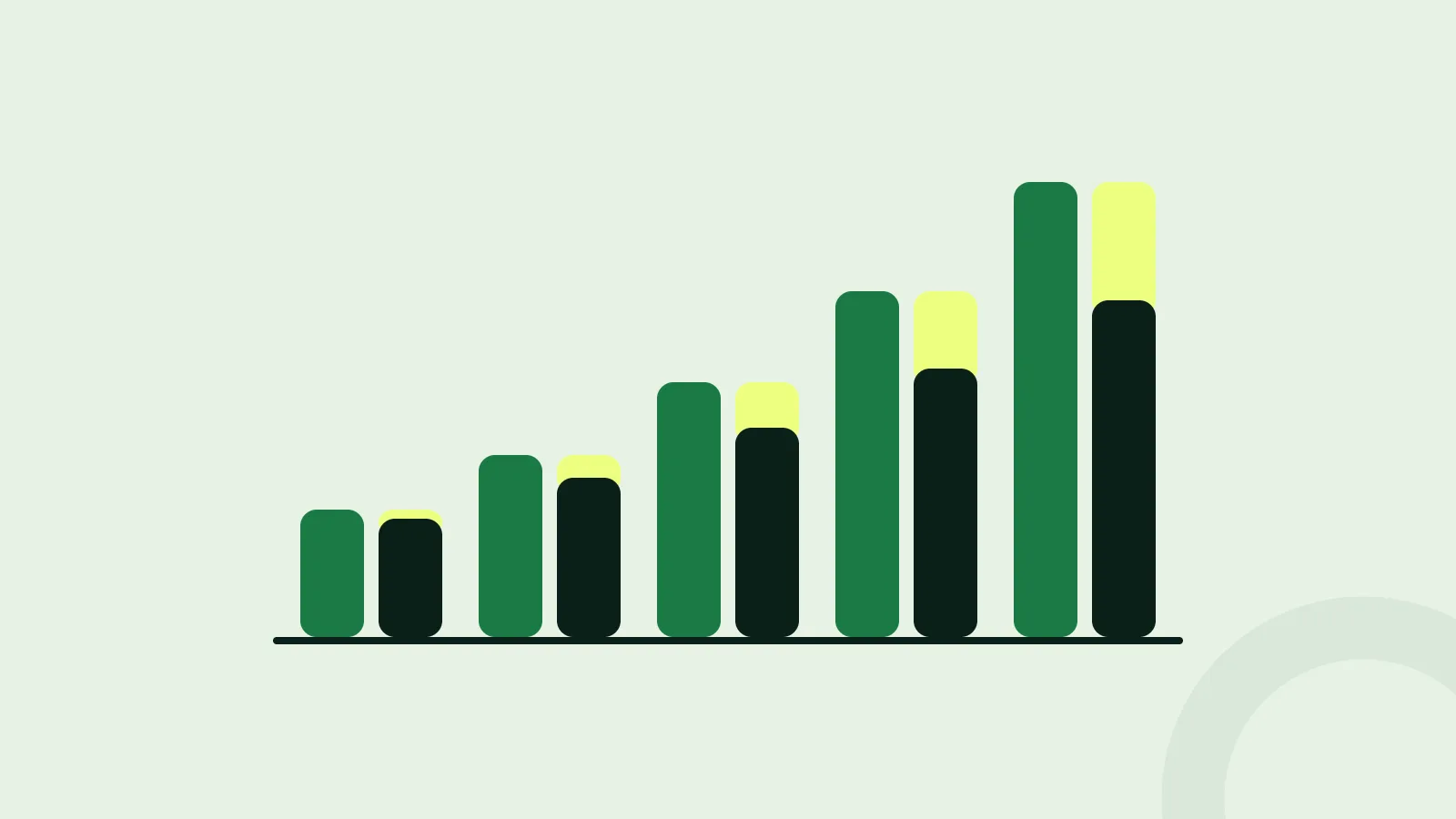
Costs shrink the part of your return you actually keep. A portfolio that grows 7% in a year but costs 1.5% to run leaves you with about 5.5%.
A small yearly fee grows into a large amount over time. In a hypothetical VND 100 million portfolio held for 20 years, a 1.5% annual cost takes about a third of the gains you would have made with no fees.
Every buy and every sell costs money. Trading often can cost several percent of your capital each year before your investments earn anything.
Compare returns after costs, not the headline number. Before you invest, ask for the total yearly cost as a percentage and the cost of each trade.
What are investment costs?
Investment costs are everything you pay to buy, hold and sell an investment. Some are easy to see, such as the fee charged each time you place an order. Others come straight out of a fund's value, such as the fund management fee, so they are easy to miss.
Whether you notice them or not, every cost reduces the money left in your account. That is why, when you work out your total return, the figure that matters most is the one after costs.
The two main types of cost
Most investment costs fall into one of two groups: costs you pay each time you trade, and costs you pay regularly while you hold an investment.
Transaction costs: paid each time you buy or sell
Brokerage fees: what your securities company charges when you place a buy or sell order, usually a percentage of the trade value.
The bid-ask spread: the price you can buy at is usually slightly higher than the price you could sell at the same moment. It never shows up as a fee line, but it is still a cost.
Tax on sales: in Vietnam, individual investors pay tax on the sale value of each sale. The lesson on taxes on Vietnamese securities explains how it is calculated.
You only pay transaction costs when you trade. Someone who buys and holds for years pays far less than someone who trades every week.
Ongoing costs: paid regularly while you hold
Fund management fees: when you invest through fund certificates or an ETF, the fund manager charges a yearly fee based on a percentage of the fund's assets.
Other fund running costs: such as custody and audit fees. Together with the management fee, these are usually disclosed as the fund's total annual cost.
Advisory or portfolio management fees: if you pay someone to manage your money, this fee is usually a yearly percentage of your assets too.
Ongoing costs are hard to spot because they are usually deducted from the fund's value rather than billed separately. But they come back every year, whether the market rises or falls.
Returns before costs and after costs
The return before costs, often called the gross return, is how much an investment grows before any fees are taken out. The return after costs, or net return, is what you actually receive.
A hypothetical example: a portfolio grows 7% in a year. If its total costs are 1.5% a year, the return after costs is only about 5.5%. Costs do not pause when the market falls: in a year when the portfolio is flat, you still lose about 1.5% to fees.
So when you compare two investments, compare their returns after costs. A fund with a higher return before fees will not necessarily leave you with more money if its costs are higher too.
Why small fees become large over time
A cost does not just take money once a year. The money it takes is no longer invested, so it stops earning returns of its own, and the gap keeps widening. This is compound interest working against you.
A hypothetical, rounded example: you invest VND 100 million, earn 7% a year before costs, and hold for 20 years, with costs taken directly out of each year's return.
Annual cost | Value after 10 years | Value after 20 years |
|---|---|---|
0% | about VND 197 million | about VND 387 million |
0.5% | about VND 188 million | about VND 352 million |
1.5% | about VND 171 million | about VND 292 million |
After 20 years, the gap between a 0.5% and a 1.5% annual cost is about VND 60 million, even though the two differ by only 1 percentage point a year. Compared with no costs at all, the 1.5% cost takes about a third of the gains. This example does not predict real returns, because markets do not rise evenly every year. It simply shows how small fees compound over time.
How frequent trading adds to your costs
Suppose that buying and later selling a position costs about 0.3% of the trade value in total, including fees on both sides and the tax on the sale (a hypothetical figure chosen to keep the math simple). With VND 100 million:
Buying and selling everything once a year costs about VND 300,000.
Buying and selling everything once a month costs about VND 3.6 million a year, or 3.6% of your capital.
At 3.6% a year, your portfolio has to grow by at least that much just to break even. That is why transaction costs matter far more for people who trade often than for people who buy and hold.
How to check costs before you invest
Ask for the total yearly cost as a percentage. For open-ended funds and ETFs, this figure is usually in the prospectus or the fund's fact sheet.
Ask what each trade costs. That includes your securities company's trading fee and the tax on sales.
Work out the return after costs. Subtract the total yearly cost from an expected or past return to get a more realistic figure.
Don't choose on cost alone. Cost is an important factor, but risk, your goals and your time horizon matter too.
Fee schedules differ between companies and can change, so check the current fee schedule wherever you open an account.
Next step
You have seen how costs reduce your returns, and why a small difference each year can turn into a large amount over many years. That raises a new question: how do you tell whether an investment is doing well or badly compared with the market as a whole? The lesson on stock market indexes introduces that yardstick, and it also explains why many low-cost ETFs simply follow an index.
Continue the main path: What is a stock market index?
Back to the core lesson: What is total return?
This content is for personal finance education only and does not constitute personalized investment advice. Consider your own goals, time horizon, ability to bear losses, and financial circumstances before investing.